Animal Sources
Animal Protein Sources for Dogs: The Complete Breakdown
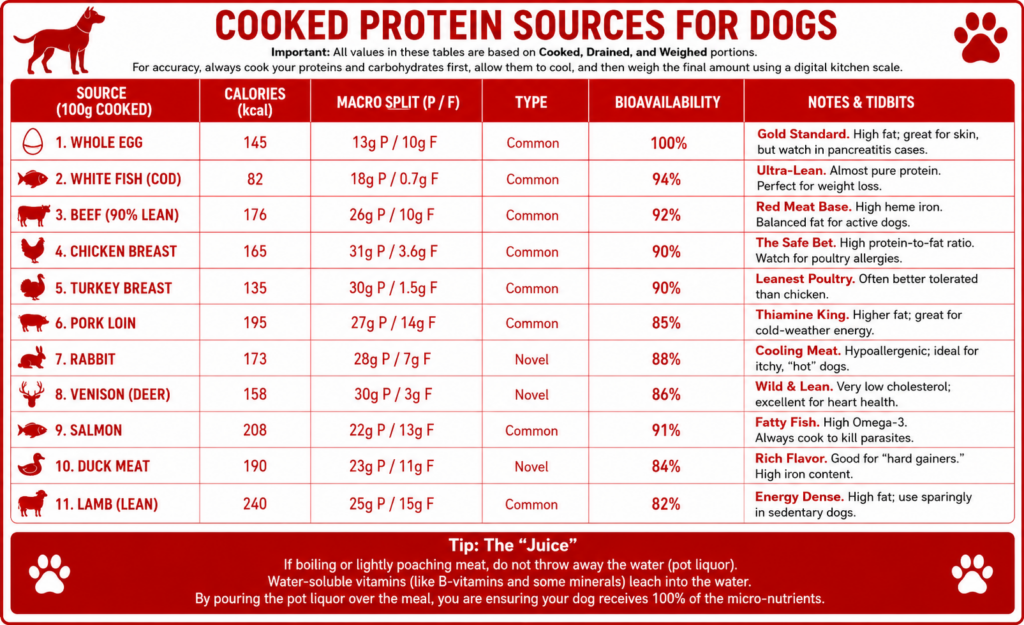
Not all protein is interchangeable. Twenty common animal protein sources for dogs — muscle meats, seafood, organ meats, and novel proteins like rabbit and bison — range from about 80 to 240 calories per 100g cooked, with bioavailability (how efficiently a dog actually absorbs and uses the protein) running anywhere from roughly 75% to 100%. The highest-bioavailability source is the whole egg, at 100%. The lowest on this list is mussels, at 75%. A complete diet leans on a mix of these categories — everyday muscle meats for volume, organ meats in small amounts for micronutrients, and rotating in a novel protein when a dog needs a break from chicken or beef — rather than one “best” protein doing all the work.
Why bioavailability is the number that actually matters
Grams of protein on a label tell you how much is in the food. Bioavailability tells you how much of that actually gets used. A dog can eat two foods with identical protein counts and absorb meaningfully different amounts of usable amino acid, depending on the source, and that gap is exactly why a whole egg (100% bioavailable) and, say, mussels (75%) aren’t nutritionally equal just because they’re both “protein.”
This is also why we’re strict about how the numbers on this page were generated in the first place. Every value here reflects a protein source cooked, drained, and weighed after cooking — not raw weight, and not an estimate. Water weight and rendered fat both disappear during cooking, and if you weigh a chicken breast raw instead of cooked, you’ll consistently overestimate how much actual food (and how many actual calories) you’re feeding. If you’re building your own plan at home, a digital kitchen scale and a habit of weighing after cooking, not before, is the single most useful thing you can do to make these numbers mean something.
The everyday workhorses: common protein sources
These are the proteins most home-prepared and fresh diets are built around — accessible, generally well tolerated, and the ones you’ll rotate through most often.
Whole egg sits at the top of the bioavailability list for a reason — it’s the reference protein against which most others get measured. It’s also fairly high in fat, which is worth watching in dogs with a history of pancreatitis.
Chicken breast earns its reputation as the safe default: a high protein-to-fat ratio and easy digestibility, though it’s also one of the more common triggers in dogs with a poultry sensitivity. Turkey breast covers similar nutritional ground and tends to be better tolerated by dogs that react to chicken, while turkey thigh brings more zinc and iron than the breast meat does, at the cost of a bit more fat.
Beef (90% lean) brings heme iron — the more bioavailable form of iron compared to the non-heme iron in plant foods — along with a fat level that suits active dogs well. Pork loin stands out for thiamine content and runs a bit higher in fat, which makes it a reasonable option for dogs that need more cold-weather energy density. Lamb is the most calorie-dense option in this everyday group, which is exactly why it’s worth using with more restraint in sedentary dogs rather than as a daily default.
Cod (white fish) is close to pure protein — under a gram of fat per 100g — which makes it one of the better options when the goal is weight loss rather than weight maintenance. Salmon sits at the other end of the fat spectrum among common proteins, and it’s worth remembering that it needs to be fully cooked; raw salmon carries a real parasite risk that cooking eliminates. Sardines, packed in water, bring calcium from the small bones along with omega-3s, functioning almost like a whole-food supplement in addition to a protein source.
Cottage cheese rounds out this group as the outlier — a dairy protein rather than a meat, low in fat, and commonly used as a gentler option when a dog’s stomach is already upset and needs something easy going in.
Novel proteins: for dogs who need a change
“Novel” doesn’t mean better — it means a dog’s immune system hasn’t been repeatedly exposed to it, which matters specifically for dogs working through a suspected food sensitivity or true allergy.
Rabbit is a genuinely useful option here: it’s naturally hypoallergenic for most dogs and often described as a “cooling” protein, which anecdotally suits dogs prone to itchy skin or inflammatory flare-ups, though the mechanism behind that claim is more traditional than clinically proven. Venison is about as lean as red meat gets, with very low cholesterol, making it a solid choice when heart health is a specific concern. Duck runs richer and fattier than most poultry, which makes it a good option for dogs that need to gain weight rather than lose it, and it carries a meaningfully higher iron content than chicken or turkey.
Bison is worth calling out specifically: it delivers more iron and zinc than standard beef at a comparable protein level, while staying leaner overall — a genuinely useful middle ground between a red meat’s nutrient density and a lower calorie load. Mussels close out this category as a different kind of novel protein entirely — a shellfish source that brings natural glucosamine and manganese along for the ride, which is part of why they show up more often in joint-support formulations than as a primary protein.
Organ meats: small amounts, big impact
Organ meats are where a diet’s micronutrient profile gets built, but they’re also the category where “more is better” stops being true.
Beef liver is the clearest example: it’s an outstanding source of vitamin A, and also the reason nutritionists consistently recommend keeping liver to roughly 5% or less of total diet. Vitamin A is fat-soluble and accumulates in the body rather than washing out, so a diet that leans too heavily on liver — however well-intentioned — can tip into toxicity over time rather than just delivering “extra” nutrition. Bison liver offers a similar micronutrient punch and is worth knowing about specifically as an alternative for dogs already sensitive to beef or chicken, since it avoids both proteins entirely.
Chicken hearts deserve more attention than they usually get. As a muscle organ, they’re a genuine source of taurine, an amino acid tied to cardiac health that’s become a bigger focus in canine nutrition following research into diet-associated heart conditions in certain breeds — hearts are one of the more accessible whole-food ways to support that.
Green tripe is the one organ meat that behaves differently from the rest of the category. It’s prized less for any single standout nutrient and more for its near-perfect 1:1 calcium-to-phosphorus ratio and its reputation as a natural source of digestive enzymes and probiotics — which is exactly why raw feeders talk about it the way people talk about yogurt for humans.
The full reference table (per 100g, cooked, drained, and weighed)
| # | Source | Calories | Protein | Fat | Category | Bioavailability | Standout For |
|---|---|---|---|---|---|---|---|
| 1 | Whole Egg | 145 | 13g | 10g | Common | 100% | The reference protein; watch fat in pancreatitis-prone dogs |
| 2 | White Fish (Cod) | 82 | 18g | 0.7g | Common | 94% | Near-pure protein; ideal for weight loss |
| 3 | Beef (90% Lean) | 176 | 26g | 10g | Common | 92% | Heme iron; balanced fat for active dogs |
| 4 | Chicken Breast | 165 | 31g | 3.6g | Common | 90% | High protein-to-fat ratio; common allergen |
| 5 | Turkey Breast | 135 | 30g | 1.5g | Common | 90% | Often tolerated better than chicken |
| 6 | Pork Loin | 195 | 27g | 14g | Common | 85% | High in thiamine; good cold-weather energy |
| 7 | Rabbit | 173 | 28g | 7g | Novel | 88% | Hypoallergenic; traditionally used for “hot,” itchy dogs |
| 8 | Venison (Deer) | 158 | 30g | 3g | Novel | 86% | Very low cholesterol; strong lean-protein option |
| 9 | Salmon | 208 | 22g | 13g | Common | 91% | High omega-3; must be fully cooked |
| 10 | Duck Meat | 190 | 23g | 11g | Novel | 84% | Higher iron; good for dogs needing to gain weight |
| 11 | Lamb (Lean) | 240 | 25g | 15g | Common | 82% | Most calorie-dense; use sparingly in sedentary dogs |
| 12 | Bison | 143 | 28g | 2.5g | Novel | 90% | More iron/zinc than beef, at a leaner profile |
| 13 | Chicken Hearts | 153 | 26g | 9g | Organ | 85% | Natural taurine source; supports cardiac health |
| 14 | Beef Liver | 135 | 20g | 4g | Organ | 80% | Vitamin A dense; cap at ~5% of total diet |
| 15 | Sardines (in water) | 208 | 25g | 11g | Common | 91% | Whole-food calcium and omega-3s |
| 16 | Turkey Thigh | 160 | 28g | 5g | Common | 88% | More zinc and iron than turkey breast |
| 17 | Bison Liver | 138 | 22g | 4g | Novel | 80% | Organ nutrition without beef or chicken |
| 18 | Green Tripe | 100 | 15g | 4g | Organ | 85% | Near-1:1 calcium:phosphorus; natural probiotic source |
| 19 | Mussels (Blue) | 172 | 24g | 4.5g | Novel | 75% | Natural glucosamine and manganese |
| 20 | Cottage Cheese | 80 | 11g | 2.3g | Common | 90% | Low-fat, gentle option for GI upset |
A tip most people skip: don’t pour out the pot liquor
If you’re boiling or lightly poaching any of these proteins rather than roasting or searing them, the water left in the pot isn’t waste — it’s where a real share of the water-soluble nutrients ended up. B vitamins and a portion of the minerals in meat leach into cooking water during boiling, and pouring that liquid back over the finished meal is a simple way to recapture nutrition that would otherwise go down the drain. It’s a small habit, but skipping it is one of the quieter ways a boiled-protein diet ends up short on nutrients that were technically “in the ingredients” the whole time.
Frequently asked questions
What’s the most bioavailable protein source for dogs? Whole egg, at 100% bioavailability, is the reference standard most other protein sources are measured against. Lean fish and poultry sources like cod, chicken breast, and turkey breast follow closely behind in the high-80s to low-90s percent range.
How much organ meat should be in a dog’s diet? Most nutritionists recommend keeping liver specifically to around 5% or less of total diet, since it’s extremely dense in vitamin A — a fat-soluble vitamin that accumulates in the body over time rather than being excreted, which means chronic overfeeding can lead to toxicity rather than just “extra” nutrition. Other organ meats like heart and tripe have more headroom, but organ meat as a whole category is still meant to be a minority share of the diet, not a base.
Why use novel proteins like rabbit, venison, or bison instead of just chicken and beef? Novel proteins are useful specifically for dogs with a suspected food sensitivity, since a dog’s immune system can only develop a reaction to something it’s been repeatedly exposed to. Rotating in a protein like rabbit, venison, or bison gives a dog’s system a genuine break from the two most commonly fed (and most commonly reactive) proteins in commercial pet food.
Is raw salmon safe for dogs? No. Raw or undercooked salmon can carry a parasite that causes “salmon poisoning disease” in dogs, which can be fatal if untreated. Salmon should always be fully cooked before feeding, which also happens to be true of the bioavailability and calorie figures listed here.
Should I save the water from boiling meat for my dog? Yes, when practical. Boiling or poaching leaches water-soluble B vitamins and some minerals out of the meat and into the cooking liquid. Pouring that liquid back over the meal recovers nutrients that were part of the original ingredient but would otherwise be lost.
Sources
- Reference values compiled from Build The Better Bowl’s internal ingredient database of cooked, drained, and weighed protein sources
- General bioavailability and amino acid profile context consistent with published comparisons of animal protein digestibility in canine diets